

Female Sports Medicine
Relative Energy Deficiency in Sport (RED-S)
Understanding how proper fueling supports performance, recovery, bone health, and long-term athletic success.
Understanding RED-S
What is RED-S?
Relative Energy Deficiency in Sport (RED-S) occurs when an athlete consistently expends more energy than they consume. Without enough energy to support both exercise and normal body functions, the body begins conserving energy by reducing processes that are not immediately necessary for survival.
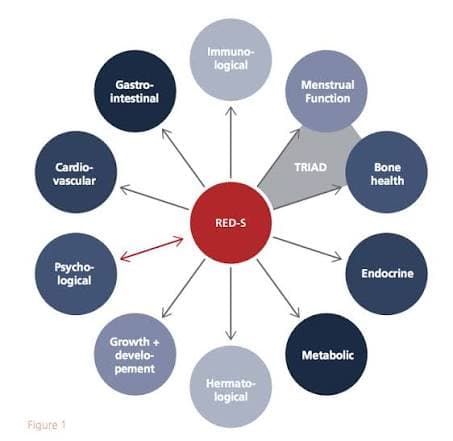
Because every organ system requires energy, RED-S can affect much more than athletic performance. It may influence bone health, metabolism, hormone production, cardiovascular function, immune health, psychological well-being, and recovery.
RED-S is a whole-body condition—not just a nutrition problem.
Whole-Body Effects
RED-S Affects More Than Performance
Because every organ system requires energy to function, inadequate fueling can have widespread effects throughout the body.
Bone Health
Reduced bone density can increase the risk of stress fractures and other bone injuries.
Menstrual Function
Low energy availability can disrupt normal hormone production and menstrual cycles.
Metabolism
The body slows its metabolism to conserve energy when adequate fuel isn't available.
Immune System
Athletes may become sick more often or take longer to recover from illness.
Cardiovascular Health
RED-S can reduce cardiovascular efficiency and negatively affect endurance performance.
Endocrine System
Hormonal changes can affect growth, recovery, metabolism, and reproductive health.
Psychological Health
Athletes may experience mood changes, irritability, anxiety, or difficulty concentrating.
Recovery & Performance
Poor fueling limits adaptation to training, slows recovery, and decreases performance.
Female Athlete Triad
Three Closely Connected Conditions
The Female Athlete Triad is considered part of the broader RED-S spectrum. These conditions often occur together, but an athlete may have one, two, or all three components.
Low Energy Availability
The body does not receive enough energy to support both exercise and normal physiological functions.
Menstrual Dysfunction
Hormonal disruptions may lead to irregular menstrual cycles or loss of menstruation.
Low Bone Mineral Density
Bones become weaker over time, increasing the risk of stress fractures and osteoporosis.
Athletes at Higher Risk
Female athletes participating in endurance, aesthetic, weight-class, and leanness sports—such as distance running, gymnastics, dance, figure skating, lightweight rowing, and cross-country—are at greater risk of developing RED-S and the Female Athlete Triad.
Warning Signs
Common Symptoms of RED-S
Every athlete experiences RED-S differently. Recognizing these common warning signs can help athletes seek support before more serious health consequences develop.
Fatigue
Stress Fractures
Poor Recovery
Recurrent Injuries
Missed or Irregular Periods
Frequent Illness
Mood Changes
Decreased Performance
These symptoms can have many different causes. If you notice one or more of these signs, consider talking with a physician, athletic trainer, sports dietitian, or another qualified healthcare professional for evaluation.
Prevention
How to Reduce Your Risk
RED-S is often preventable. Proper fueling, recovery, and early recognition of symptoms can help athletes stay healthy and perform at their best.
Fuel Your Body
Eat enough to support both your training and your body's daily functions. Adequate energy intake is essential for health, recovery, and performance.
Prioritize Recovery
Recovery is part of training. Prioritize sleep, rest days, and proper nutrition to allow your body to adapt and repair.
Ask for Help Early
If you experience symptoms of RED-S, talk with a physician, athletic trainer, sports dietitian, or another qualified healthcare professional.
Remember
Peak performance starts with good health. Eating enough to support your training isn't just about improving performance—it's essential for protecting your bones, hormones, immune system, and long-term well-being.
Watch & Learn
Understanding The Female Athlete Triad in 60 Seconds
Watch this short video for a quick overview of what RED-S is, why it happens, and why recognizing the warning signs early is so important for female athletes.
Learn More
Additional Resources
Explore these trusted resources to learn more about RED-S and the Female Athlete Triad.
Boston Children's Hospital
Female Athlete Triad Fact Sheet
A downloadable guide explaining the Female Athlete Triad, risk factors, symptoms, and treatment.
Download PDF →Boston Children's Hospital
Understanding RED-S
Learn more about Relative Energy Deficiency in Sport, including its causes, symptoms, and prevention.
Read Article →